Motorhome Seat belt Laws In The UK
Motorhome Seat Belt Laws And Legislation
Motorhome seat belt safety is governed under similar laws to those of car seatbelt safety. The last few years have seen a change in some of the laws and there are some motorhome-specific regulations on wearing seatbelts. The effects of not wearing a seatbelt whilst travelling in a motorhome could be very severe if you are involved in a crash. Crash tests have been carried out by numerous motorhome manufacturers and seat belts have now been designed to prevent and reduce, as much as possible, the effects of this kind of impact.
Motorhome seat belt laws:
Who need to wear a seatbelt in a motorhome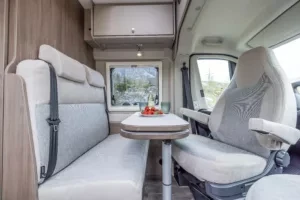
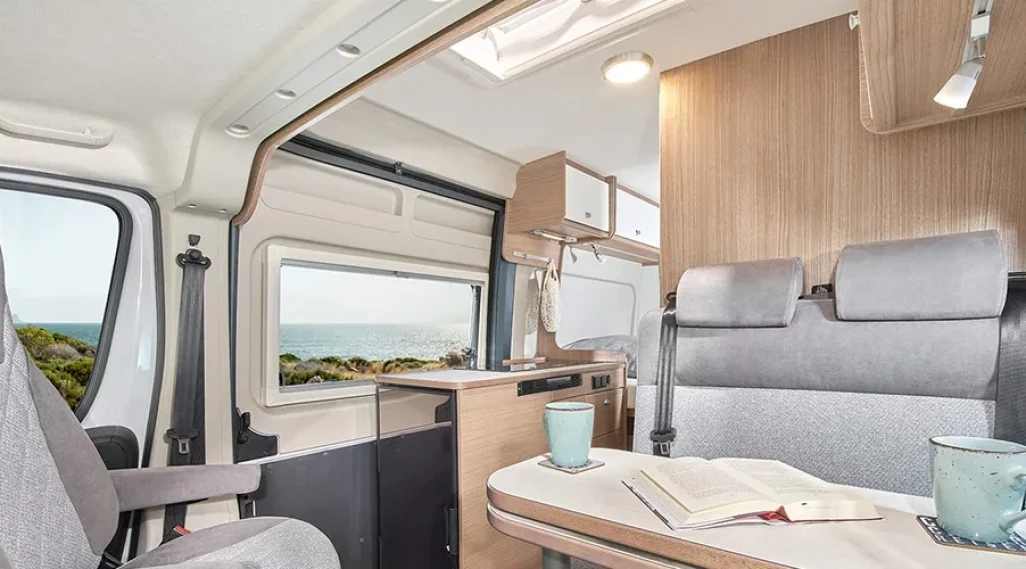
- If the motorhome was manufactured after 2006 – you must identify the seats that you have designated as passenger travel seats. The Motorhome must have seatbelts for all passenger designated travel seats within the entirety of the vehicle, and the passengers are required to use them while in motion/transit. Forward facing seats require three-point -seatbelts for the driver and passengers and side facing seats cannot be designated as travel seats.
- If the motorhome was manufactured after 1st October 1988 – you must have seatbelts fitted for the driver as well any forward-facing passengers. Theses seat belts must be worn when the vehicle is in motion/transit, the seatbelts for the driver and passenger must be three-point belts but the other belts fitted with in the motorhome may be two point or three-point belts.
- If the motorhome was manufactured before 1st October 1988 – you must have seatbelts for the driver and the passenger in the front of the motorhome, it is not necessarily illegal for a rear seat passenger not to wear a seatbelt however the police could determine not wearing a seatbelt in the rear of the motorhome to be a offence if the motorhome was to be driven at speed or in a reckless manner.
- Although not illegal, the government does not recommend using side facing seats in the rear while the motorhome is drive or in motion. In the invent of an accident, seatbelts actually increase injury risk if there is a frontal collision.
- Child seats, including those with restraints, must be used with three-point seat belts. Laws related to child car seats are classified as such according to the height of the child. In normal circumstances, children are required to use a child seat until they reach a height of 4ft 4” or reach the age of 12. Some child seat systems might come with additional instructions - it is important that these are complied with.
- Which child seat do I need in my motorhome?. The most recent laws introduced on child safety in motor vehicles categorise child seats according to the weight of the child. The categories of child seats are as follows:
- Group 0+ - Children up to 13kg: A carrier with a harness, or a baby seat which is rear facing,
- Group 1 - Children from 9kg to 18kg: A forward facing or rear facing baby seat, which uses a harness or safety shield.
- Group 2 - Children from 15kg to 25kg: A high-backed booster child seat or booster-cushioned child seat that can be forward facing or rear facing, which uses a harness or safety shield.
- Group 3 – Children from 22kg to 36kg: A high-backed booster child seat or booster-cushioned child seat that can be forward facing or rear facing, which uses a harness or safety shield.
- specifically designed for use with a lap seat belt
- fitted using ISOFIX anchor points
- deactivate any front airbags before fitting a rear-facing baby seat in a front seat
- not fit a child car seat in side-facing seats
What to look for when purchasing a motorhome
When purchasing a motorhome you should check to see whether or not there is any corrosion that could lead to faults and also check the functionality of the seatbelt. Think about who will be travelling with you. If you have a family with young children then you will need to make sure the vehicle has the right amount of seatbelts in designated seating areas. Bear in mind that even if you are operating within the confines of European or UK law then you should be firstly considering the safety of passengers. It is not just the safety of the unbelted passengers but also the safety of front-facing ones. In the event of a high impact collision, passengers in the back of any vehicle can easily kill those in the front if they do not have seatbelts on. Insurance could also be invalid if you have sideways fitted seatbelts and there is a risk of prosecution if back passengers are deemed to be travelling dangerously. For more information, please enquire here.