
Campervans for Sale UK in Stock
Hire Purchase (HP) representative example
On the road price of £83,570, with a £25,071 customer deposit, borrowing £58,499 at a representative APR of 8.90%
- 118 monthly payments of£727.01
- Final payment£737.01
- Total amount payable£112,322.20
- Annual mileage5,000
- Option to purchase fee£10.00
- Rate of interest4.91%
Make
Price
Mileage
Age
4x4
Pop Top
Labels
Condition
Floorplan
Length
Berths
Seatbelts

Eriba Car
ERIBA Car 602
- Automatic
- 2 seatbelts
- 2 berths

HYMER Camper Van
HYMER Camper Van Grand Canyon S Xperience
- Automatic
- 4 seatbelts
- 2 berths

Eriba Car
ERIBA Car 602
- Automatic
- 2 seatbelts
- 2 berths
Eriba Car 602
Redefining Colour Limits

HYMER Camper Van
HYMER Camper Van Grand Canyon S 4x4 CrossOver
- Automatic
- 3 seatbelts
- 2 berths

Eriba Car
ERIBA Car 600
- Automatic
- 4 seatbelts
- 4 berths

Eriba Car
ERIBA Car 600
- Automatic
- 4 seatbelts
- 4 berths
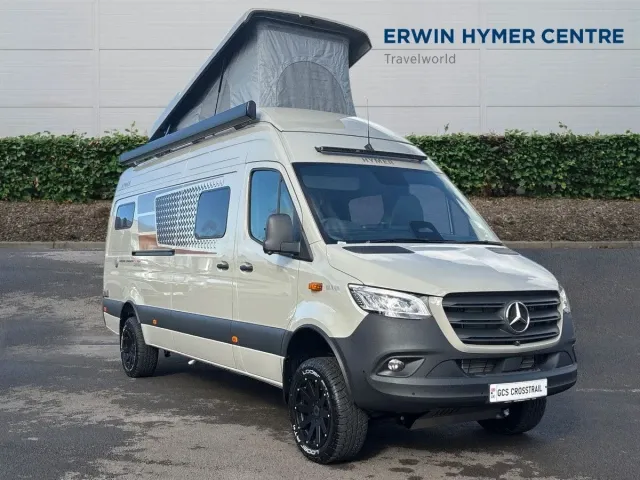
HYMER Camper Van
HYMER Camper Van Grand Canyon S 700 CrossTrail
- Automatic
- 4 seatbelts
- 4 berths
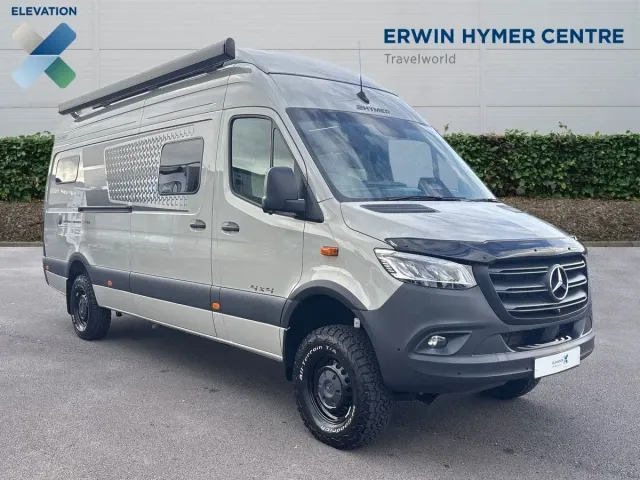
HYMER Camper Van
HYMER Camper Van Grand Canyon S 700 Bespoke
- 2026
- 2,000 miles
- Automatic
- 4 seatbelts
- 4 berths

Dethleffs Dethleffs Globetrail
Dethleffs Globetrail Performance 600 DR
- Automatic
- 4 seatbelts
- 3 berths
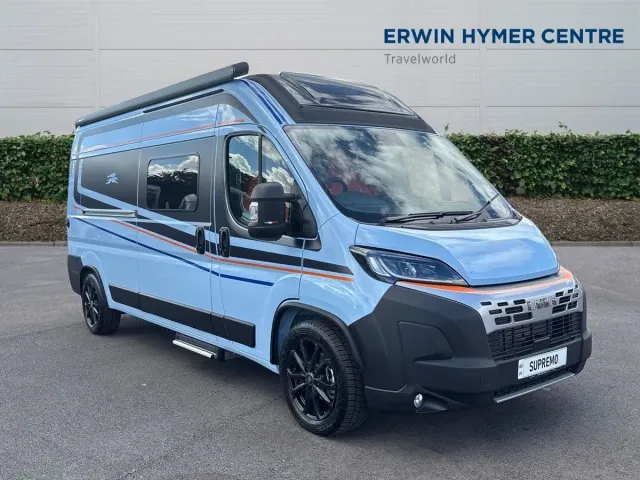
Laika Kosmo Supremo
Laika Kosmo Supremo CV 60
- Automatic
- 4 seatbelts
- 3 berths
Frequently Asked Questions About New Campervans
How much does a campervan cost in the UK?
In the UK, older used campervans can cost under £15,000, while a new, professionally built model may start at around £55,000 and premium versions can exceed £100,000. Campervans currently advertised on this page start at approximately £82,340, reflecting its premium range. Budget separately for insurance, servicing, tax and campsite fees.
What is the difference between a campervan and a motorhome?
A campervan is generally a converted van with a compact living area, making it easier to drive, park and use day to day. A motorhome is usually a larger purpose-built or coachbuilt vehicle offering more storage, living space and bathroom facilities. Both may legally be described as 'motor caravans', so compare the actual dimensions and layout rather than relying on the label.
Can you drive a campervan on a standard UK car licence?
Yes: a standard category B licence generally covers a petrol or diesel campervan with a maximum authorised mass (MAM) of up to 3,500kg. A vehicle over 3,500kg and up to 7,500kg usually requires category C1, although some drivers who passed before 1997 already hold this entitlement. Check the vehicle's plated MAM and your licence against GOV.UK's motorhome rules before driving.
Which campervan brands are the most reliable?
There is no universally most reliable campervan brand because the base vehicle and the living-area conversion can perform differently. In the 2025 UK owner-satisfaction survey, Vantage, Consort and Bilbo's scored highly among converters, while Volkswagen and Mercedes performed strongly as base vehicles; Hymer also ranked well for pre-owned motorhomes. Prioritise maintenance records, damp checks, warranty support and the specific model over a brand name alone.
Are campervans expensive to run?
Running costs can be significant, particularly if you drive long distances or pay for secure storage. Allow for diesel or electricity, insurance, servicing, tyres, repairs, vehicle tax and overnight pitches; tax varies with the vehicle's classification and weight. A smaller, lighter campervan can be cheaper to run than a large motorhome, but compare real quotes before buying.
What are the disadvantages of owning a campervan?
The main drawbacks are the purchase price, ongoing maintenance and the limited space for storage, cooking and washing. High-roof or longer models can be awkward in car parks and narrow streets, while compact pop-top models may lack an indoor bathroom. Consider where you will keep the vehicle and try the layout on a short hire trip before committing.
Is buying a campervan worth it?
A campervan can be worth buying if you travel regularly and value flexible holidays, particularly when it can also serve as your everyday vehicle. Compare its total ownership costs and likely depreciation with hiring and other accommodation, rather than assuming it will be a financial investment. Hiring a similar layout first is a sensible way to test whether you will use it enough.
What should you look out for when buying a campervan?
Check for damp or water ingress, corrosion, tyre age and evidence of regular engine and habitation servicing. Test the heating, electrics, gas, water system, toilet and roof mechanisms, and confirm that the vehicle's payload suits your passengers and luggage. For a used van, verify the V5C, VIN and MOT history before paying.
What is the best campervan to buy in the UK?
The best campervan depends on how you will travel: a compact pop-top suits everyday driving and weekend trips, while a fixed-roof van conversion often offers more comfort for longer touring. Match the number of belted seats and beds, washroom, storage, payload and licence requirements to your needs. Compare independent 2026 model assessments rather than treating any single brand as the best for everyone.
Which campervan offers the best value for money?
Best value means the most useful equipment and layout for your budget, not simply the lowest price. Among the premium models currently advertised here, the ERIBA Car 602 is listed from around £82,340, whereas some HYMER campervans exceed £100,000. Compare standard equipment, washroom, payload, warranty and likely running costs before judging which gives better value.
Do campervans have a toilet and bathroom?
Some campervans have a dedicated washroom with a cassette toilet, basin and shower, but others have only a portable toilet or no bathroom at all. A fixed-roof van conversion is more likely to include a built-in washroom than a compact pop-top camper. Check the exact floorplan and consider how you will refill water and empty the toilet while travelling.
Are campervans expensive to insure?
Not necessarily: premiums vary with the campervan's value, conversion, security, storage address, driver history and annual mileage. Ordinary car insurance should not be assumed to cover a converted campervan or its camping equipment, so disclose the conversion and intended use. Compare specialist policies and confirm any limits on equipment, overseas travel and full-time occupation.
How long do campervans typically last?
There is no fixed lifespan: a well-maintained campervan can remain usable for decades, and many commercial-van engines exceed 100,000 miles, with some lasting well beyond 200,000. However, damp, corrosion, worn fittings and neglected servicing may shorten its useful life before the engine wears out. Condition, maintenance history and a professional habitation inspection matter more than age or mileage alone.
Are campervans difficult to drive?
Most modern campervans are manageable to drive once you become familiar with their dimensions, mirrors and turning circle. Longer or higher-roof vehicles need extra care when reversing, passing parked cars and approaching width or height restrictions. A test drive or motorhome manoeuvring course can build confidence before your first long trip.
What is the smallest campervan with a toilet?
A compact UK example with a permanent toilet and shower is the Auto-Trail Expedition 54, which is approximately 5.4 metres long. Smaller pop-top conversions may accommodate a portable toilet but typically do not have a separate enclosed washroom. There is no single definitive smallest model across bespoke builds, so check whether you need a fixed bathroom or simply toilet facilities.
Which campervan is best for full-time living?
For full-time use, prioritise a well-insulated fixed-roof campervan with reliable heating, a permanent bed, indoor toilet and shower, and practical storage. Check water-tank capacity, battery charging, ventilation and remaining payload when fully loaded; a premium HYMER-style van conversion may fit, but its exact specification matters. Also confirm that the insurance allows full-time use and that your planned overnight stops are lawful.
Is it better to buy a caravan or a campervan?
A caravan often gives you more living space for the money and lets you leave it on site while using your car locally. A campervan is easier for frequent short stops and spontaneous travel because there is no trailer to tow or pitch. The better choice depends on your tow-car suitability, storage space, touring style and need for a daily vehicle.
Which campervan is the most economical to run?
A smaller, lighter campervan with an efficient engine will generally use less fuel than a heavier, less aerodynamic model, but no single model is always the cheapest to run. Compare real-world fuel consumption for equivalent routes, together with insurance, tax, tyres and servicing rather than advertised mpg alone. Correct tyre pressures, sensible speeds and regular maintenance also help reduce costs.
Can you drive a campervan after the age of 70?
Yes, you can continue driving a campervan after 70 if you remain medically fit and hold the appropriate valid licence entitlement. At 70 you must renew your driving licence, normally every three years; category C1 entitlement for campervans over 3,500kg involves additional medical and renewal requirements. Confirm the vehicle's plated weight and your licence categories using GOV.UK's age-70 renewal guidance
Can you park and sleep overnight in a campervan anywhere in the UK?
No: you cannot assume you may park and sleep overnight anywhere in the UK, even when daytime parking is permitted. Local byelaws, car-park signs, landowner rules and restrictions on overnight occupation may apply, and Scotland's outdoor-access rights do not extend to motor vehicles. Use authorised campsites or designated motorhome stopovers, and follow any time limits and conditions; see NatureScot's guidance